
What floor plans do not say
The number of tatami mats written on a floor plan and the information that shapes actual living and rent are not the same. We think about it by separating what the drawings tell you, what the site tells you, and what neither tells you.

BENERU writes for readers who live in Japan. Taxes, loans and the other rules described here are those of Japan, and they assume a resident of Japan.
This page is a translation of the Japanese original. If the two differ, the Japanese original prevails.
Good day.
People give me a slightly odd look when I tell them, but I like gazing at floor plans.
I look at them even when I have no plans to buy. When there is a pillar in a strange spot, or a hallway has a strangely ambitious shape, I end up thinking about it for a while.
But the more I come to like looking at floor plans, the more I care about what is not written on them rather than what is.
What is written on a floor plan is, surprisingly, quite strictly defined.
Take the number of tatami mats (jō), for example. Under the Fair Competition Code concerning the Representation of Real Estate, when the size of a living room is shown in tatami mats, it is set at at least 1.62 square meters per mat. It is the figure obtained by dividing the wall-center area by the number of mats.
There are guidelines for DKs and LDKs too. If there is 1 living room, a DK is 4.5 jō or more and an LDK is 8 jō or more. If there are 2 or more rooms, a DK is 6 jō or more and an LDK is 10 jō or more.
In other words, if it says "1LDK," that LDK is at least about 8 jō. That much is assured.
Then, if it says the LDK is 17 jō, is it large?
It is large. But depending on whether those 17 jō are a single long, narrow strip or close to a square, the furniture you can place changes. Whether you can fit both a sofa and a dining table makes quite a difference to the impression at a viewing.
The area is the same. Only the way it can be used differs.
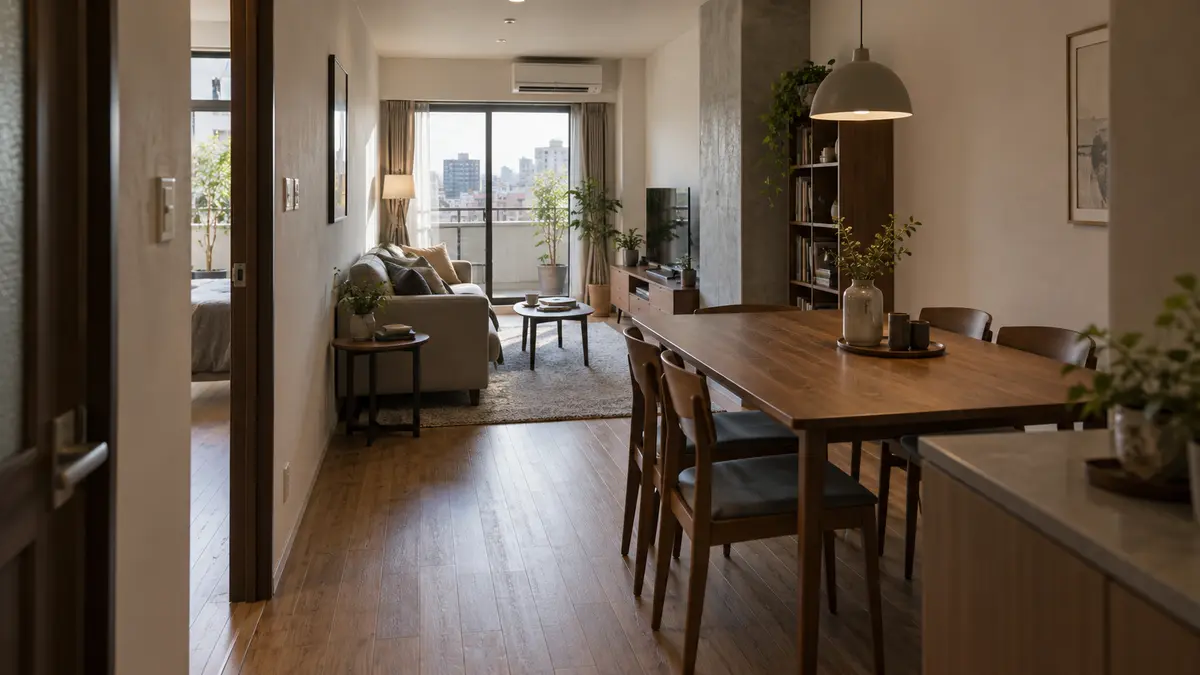
What is not written is sometimes what decides the rent
Let me list, as they come to mind, the things that do not appear on a floor plan.
What kind of people the neighbors are. How much footsteps from the floor above carry. Whether you can hang laundry in the outdoor corridor. From what time the garbage area can be used. Whether the entrance is dark at night. Whether the bicycle parking is overflowing. Whether it is a property with a lot of rent arrears. Why the previous tenant left.
These directly affect rent and the length of vacancies. And none of them appear on the drawings.
They do not appear not because they are being hidden. A floor plan is meant to show the shape of a building, not to show how people live. That is all there is to it.
But the buyer's side compares by lining up drawings and numbers. While lining up the things that can be compared, the things that cannot be compared disappear from view.
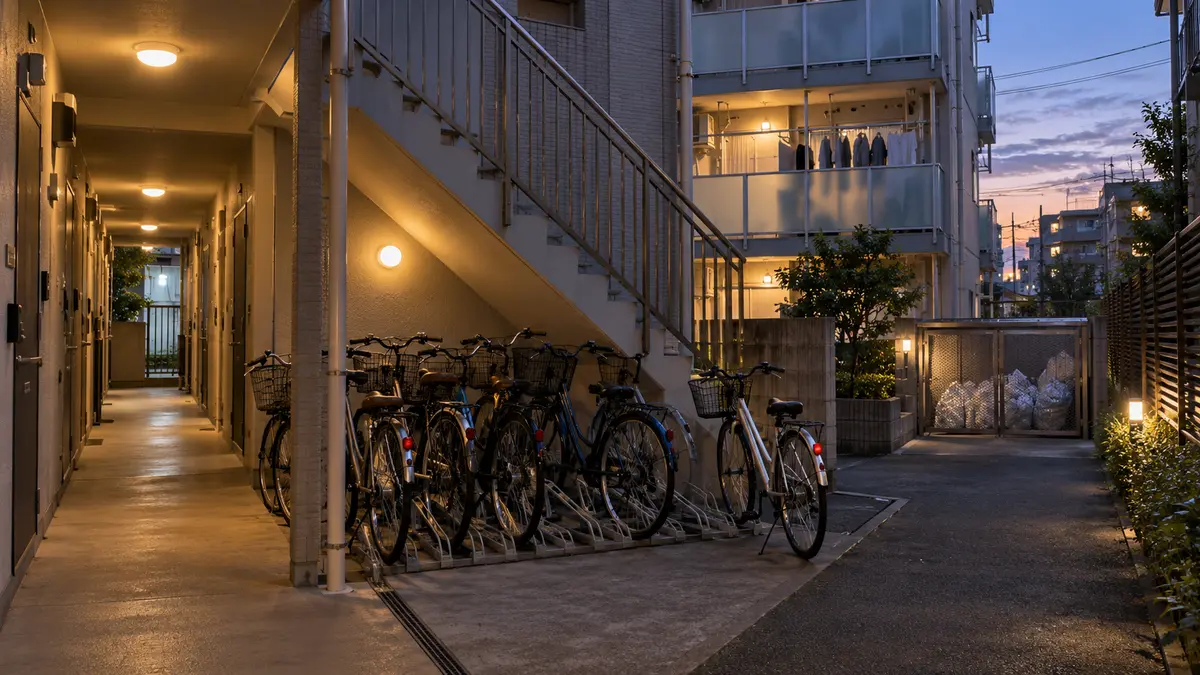
Then can you tell by looking at the site?
Here, the usual thing would be to say, go and look at the site. That is quite true.
But the site is not all-powerful either.
Viewings usually happen during daylight hours. If you go at noon on a weekday, you cannot tell the noise from next door, the darkness of the street at night, or how crowded the station is in the morning. If you look in summer, you cannot tell how cold it is in winter, and looking at a vacant unit does not tell you who will live next door.
In other words, there are 3 things: what the drawings tell you, what the site tells you, and what neither tells you.
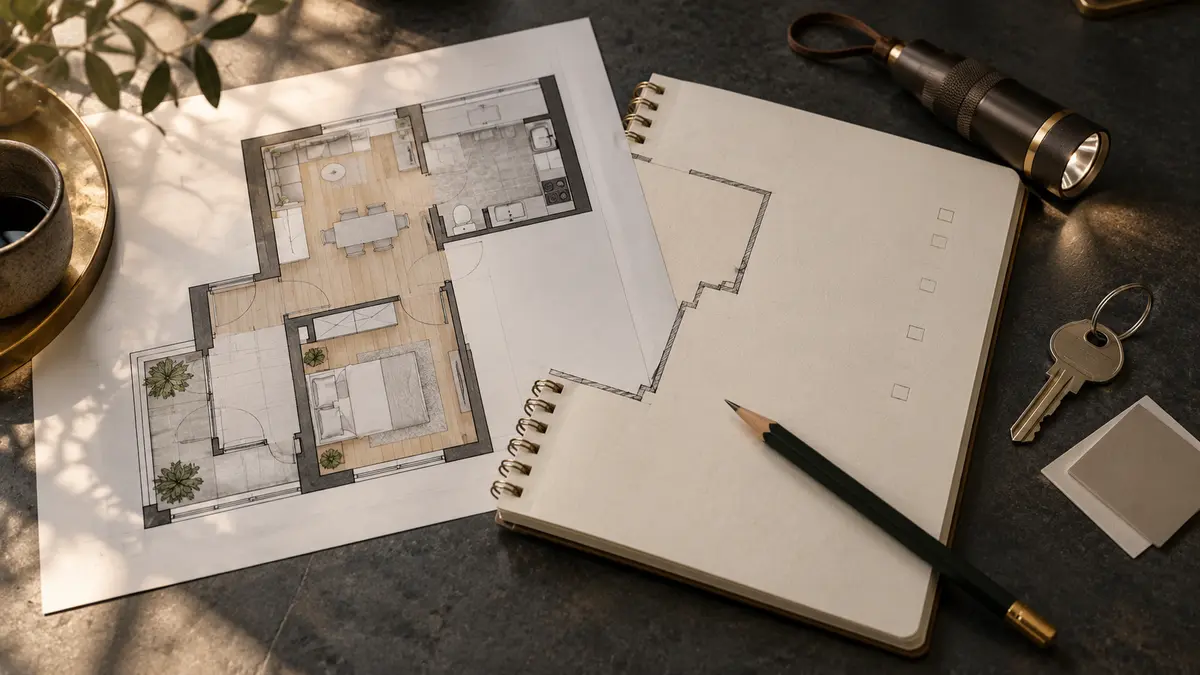
There is probably no way to bring the third to zero. So rather than reducing it, it is more realistic to know how much of the third there is.
And if you feel there is a lot you cannot tell, you fill that portion with your conditions. Make your own funds thicker. Give your repayments room. Assume a longer vacancy period.
Reduce uncertainty by gathering more information, or loosen your conditions on the premise of uncertainty. What you can do is one of the two.
I still like looking at floor plans.
But lately, the way I look at them has changed a little. I have started drawing a line first: this is as far as this drawing tells me.
When you draw the line, you can see what remains. What remains becomes the list of things to go and ask about.