BENERU
BENERU PRESS

Columns

Real estate, finance and policy, in a form you can use to decide.

BENERU writes for readers who live in Japan. Taxes, loans and the other rules described here are those of Japan, and they assume a resident of Japan.

Sanji Kuruma, seated formally in seiza in a winter tatami room before a steaming sukiyaki pot, folding fan in hand, eyes narrowed
Published

Behind the scenes at BENERU | Sukiyaki manners at the year-end party, so your staff do not come to dislike you

At the year-end party sukiyaki, Sanji Kuruma, a writer at HITOROKU, lectures on the manners that keep your staff from disliking you. From how to choose the one to whom the pot is entrusted, through the conduct one must never commit and a digression on how East and West make the dish, the lecture lands on the nabe bugyō (the self-appointed hot-pot magistrate) and on what it means to "entrust."


  • An average is nobody's property

    The latest published real estate price index is for December 2025, and publication has been postponed since. But even without the delay, the index is not the price of your own property. We trace back three things: the population, the conditions held equal, and the timing.

    A generated image of a fictional shopping street, where a closed shutter in the foreground and an open shop can be told apart, while the row of shops in the distance melts into bands of color
  • Behind the scenes at BENERU | A company with more writers than people

    Few humans, but an oddly large number of writers. Nata, a writer at HITOROKU, tells 3 incidents that really happened behind the scenes at BENERU. One line slipped in the records and someone was mistaken for someone else, a third hand grew in a picture, and the titles I added were shot down in a single sentence.

    Nata, arms folded and laughing, with an empty chair and monitors in the background, in an office at night
  • Rent moves last

    In September 2026, when prices rose 2.1%, building repair costs rose 4.5% and rent rose 0.8%. Even when they move in the same direction, the order and speed in which they move are set by the intervals of contracts and renewals.

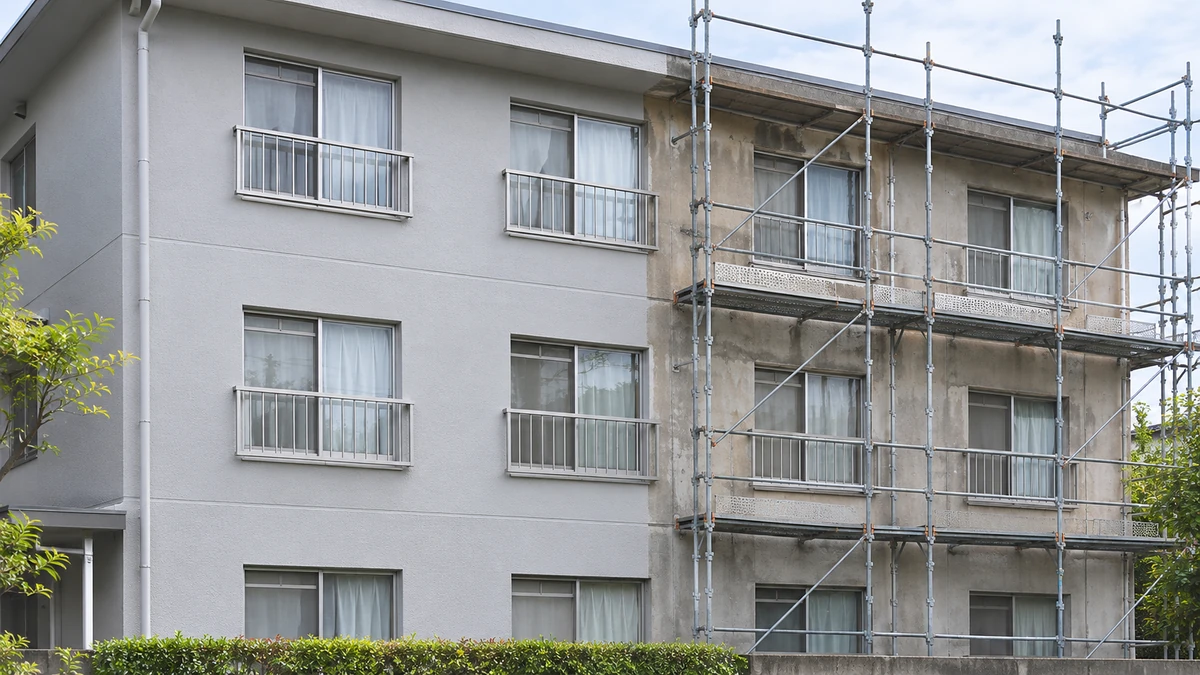
    A generated image of an apartment building where a section with finished exterior wall renovation sits next to an unrenovated section still under scaffolding
  • Credit does not accumulate

    Cash accumulates, but the amount you can borrow does not. Even if your annual income does not fall, the limit shrinks just because you get older. Credit you did not use, and credit you used up. Both carry a loss you cannot see.

    A tree planted in a single garden, and 2 saplings waiting outside the garden
  • You delegated the work, not the call

    Restoration, rent arrears, insurance, rent reductions. Even if you outsource management, the one who decides is the owner. Yet it does not reach you in the form of a decision; it becomes an after-the-fact report. We sort out why that happens, and the one number to decide before it does.

    Cleaning tools, an old chair, and a spare key on a shelf
  • It can't be sold, so it doesn't fall

    Comparing stocks and real estate by yield does not line up. Being hard to sell has a price, and it shows a different face 3 times: when you buy, while you hold, and when you sell. We take apart what is inside what gets called "defensive investment."

    A closed front door and light coming in through the window beside it
  • The interest rate is not attached to you

    The same bank, on the same day, lends at 2.375% a year and at close to 15% a year. When you separate out what an interest rate is the sum of, you can see which parts the borrower can move and which parts they can't. What the gap between variable and fixed is the price of also comes out of that.

    The entrances of small shops lined up on the same street
  • Prices are not moved by population

    We sort out why real estate prices don't fall even though the population is shrinking, by separating it into the number of households and the 2 variables that set prices. Rental demand and investment demand are separate things, and they work in different directions and at different times.

    A room during a viewing, light by the window, and a floor plan
  • Your first property is your education

    If you start real estate investment in your mid-20s, think of your first property as your education. Owning one condominium unit makes cash flow, tax returns, and the PL and BS make sense as your own business. I also write about how to tell firms apart.

    The corridor and front doors of an apartment building looking out over a residential area
  • Did the bank that made headlines over fraudulent lending have a bad reputation from before?

    The lending standards of the regional bank that made headlines over fraudulent lending were, if anything, strict. The ones who mainly handled the falsification of documents were the real estate companies that brought clients in. Together with the facts found regarding the bank's own involvement, I write my view as the author.

    Two sets of documents placed in a quiet meeting room
  • A contract arrived in which a "guarantee company" pays the rent. How is it different from an ordinary rental contract?

    A guarantee company that pays on behalf of a tenant in arrears and a sublease, in which a company becomes the tenant and sublets, are different contracts. The name "rent guarantee" is the source of the confusion. What you look at in the contract is who the tenant is.

    A desk with an open document folder and a pen, by a window through which the entrance of a rental home can be seen
  • Is it true that "salaryman landlords lie dead in heaps"?

    "Leave-it-to-us investment" is an advertising phrase, and the premise that "salaryman landlords lie dead in heaps" is not happening. Most people who feel they have failed were not deceived; they simply do not understand the structure of the returns.

    A plain book and a property brochure placed by a window
  • I heard in a video that "real estate investment fraud is rampant." Is it true?

    Information about real estate investment, both the stories of making money and the stories that it is fraud, is both correct and both exaggerated. I write about the structure of returns in studio condominium investment, and the difference between "being deceived" and "not understanding."

    A desk with a device playing a video, a property brochure, and a calculator lined up
  • I was told that incorporating is pointless unless we build 1 more apartment building. Is that true?

    You do not need to build 1 more apartment building in order to incorporate. If you move individually owned properties to a corporation, depreciation can be taken again. However, taxes are incurred when moving them. Before that, the first thing is to grasp how much the family's assets amount to.

    A scene with several property brochures and a calculator on an office desk from which an ordinary apartment building is seen through the window
  • Where should I start, and how should I gather knowledge about real estate investment?

    It doesn't matter where you gather information from. What matters is not swallowing it whole, not forgetting what you are investing for, and measuring profit by net worth. Start by understanding the mechanism of using credit.

    A book and a notebook by a window overlooking a residential area
  • If I do real estate investment, should I use a loan?

    The point of real estate investment lies in being able to invest using borrowing. This is called "using credit." However, not many people can get financing. I also lay out population projections, average salaries, and the rules on credit information.

    A scene with a document folder and a calculator in a financing meeting room where 2 chairs face each other
  • My parent says they will sell the family home to keep their business's cash flow going. Is there any option other than selling?

    Before selling the family home to keep a business's cash flow going, it is worth checking whether financing can be obtained with the house as collateral. I write about the difference between selling and secured financing, what happens when you can no longer repay, and what you learn if you cannot borrow.

    The lived-in entrance of a family home seen across the garden, with lights on inside
  • Why don't wealthy people buy many houses and live on the rent?

    Many wealthy people do run rental businesses. But rather than buying many detached houses, most of them own condominium buildings using borrowed money. This piece covers the difference between the wealthy and investors, and the idea of running a low yield on a large amount.

    A quiet residential street lined with ordinary mid-rise apartment buildings
  • What is the minimum budget to buy a good investment property?

    A "good property" is only defined once the household's situation and the purpose of the investment are set. Taking the example of a 30-year-old household with an annual income of ¥6 million preparing for retirement funds, this piece estimates how much to borrow, how much to pay, and what remains. All figures are assumptions.

    A family home with a notebook and pencil on the desk and a child's bag hanging on a chair
  • How much investment financing can you get while still carrying a home loan?

    Even with a remaining home loan balance of ¥76 million, there is room to obtain investment financing. This piece looks at an example with an annual income of ¥9.1 million through 2 lenses, the income multiple and the debt-to-income ratio. The main text is an answer as of 2025, with a supplementary estimate using different interest rates.

    House keys, 2 folders, and a calculator placed on a desk at home
  • Is it a good idea to buy an old studio in a regional city for a few million yen to live in after retirement?

    Old studios in regional areas can be bought for a few million yen, but the management fee, repair reserve fund, and fixed asset tax continue as long as you own one, and real estate cannot be thrown away. Using an example with a purchase price of ¥2 million, this piece sets out the figures for renting it out and for living in it, and lists the documents to check before buying.

    An aging mid-rise condominium building standing in a residential area of a regional city
  • Why are management fees in high-rise condominiums high despite the many units?

    With many units, the burden per unit should be spread thinner, yet management fees in high-rise condominiums are high. This piece separates the management fee from the repair reserve fund and sorts out the reasons from both the number of units sharing the cost and the total cost. It also looks at the Ministry of Land, Infrastructure, Transport and Tourism's guideline figures for the repair reserve fund.

    A condominium's common lobby with 4 elevators and a cleaning cart
  • If an inherited apartment building has a tenant with no written contract, can you get them to move out?

    Even without a written contract, a lease is formed if there is agreement to lend, to rent, and to pay rent, and the person who inherits takes over the lessor's position. This piece covers where to start as the new owner before asking a tenant to move out.

    The entrance of an old apartment building showing tenants' everyday life, with a document holder placed in front
  • Does a 50-year home loan benefit the borrower or the lender?

    A home loan with a 50-year loan term lightens the monthly repayment but increases the total interest. Assuming borrowing of ¥50 million at a 1% interest rate, this piece compares 35 years with 50 years and sorts out the borrower's options and the lender's aims.

    Keys, a notebook, and a clock on a desk in a room overlooking a residential area
  • Why is a broker's valuation so different from a dealer's buyout price?

    A broker said it would likely sell for ¥12 million through brokerage, while a dealer offered ¥3 million to buy it outright. This gap is the difference between the price an individual buyer pays and the price a dealer pays to acquire stock. This piece sorts out what differs between brokerage and buyout, including commissions and the scope of liability.

    An old detached house with 2 blank documents placed in front
  • What does "if interest rates are low, a loan is better" actually mean?

    When I tried to buy a car with cash in one payment, I was told "if interest rates are low, a loan is better." This piece explains what that means using a balance sheet and the "benefit of time." What creates the difference is how you use the cash after borrowing, and it also sorts out the point that investment gains are not certain.

    A passenger car seen through a café window, with keys and a notebook on the table
  • Money moves only when a tenant is placed

    The payment for rental management looks like the management fee, but the property management company's income moves the most when tenant placement is decided. Using a fictional example, this piece compares a 10-year long-term tenant with turnover every 2 years, and sorts out what to confirm with the property management company at renewal time.

    Keys and documents placed in the open entrance of a rental home
  • What is left, and what is received

    Inheritance planning with real estate may lower the assessed value, but it leaves problems with funds for paying the tax and with how easily the property can be turned into cash. Using a fictional example, this piece sorts out the difference between the assessed value the person leaving the estate optimized and the cash the people receiving it need.

    Nel Shikina checking an apartment building's valuation documents and the tax payment deadline
  • When 2 overlap, the margin disappears

    Vacancy and rising interest rates may be bearable on their own, but when they happen at the same time, they wipe out the margin. Using a fictional example, this piece sorts out how to read a stress test that moves 2 conditions at once.

    Nel Shikina examining income and expense documents that overlay vacancy rates and interest rates
  • Cut ¥10,000, and it comes to ¥480,000

    Is it really better to cut rent by ¥10,000 to fill a unit faster? We compare 4 years of total income with an advertising fee, and sort out the long-term effect a rent cut leaves behind.

    Nel Shikina comparing a rent reduction with a one-time advertising fee
  • Unpublished properties are not hidden

    An unpublished property is not a secret shelf; it is a property whose turn to reach the market has not come yet. We sort out the direction of cause and effect, that the reason for a low price lies not in being unpublished but in the seller's circumstances, and 4 questions to check before the property itself.

    A property brochure and a smartphone on a desk overlooking a residential area
  • Where does the rent go?

    Where does the rent a tenant pays go? Using a fictional example of ¥500,000 a month, we sort out the differences between expenses, interest, principal repayment, and cash left over.

    Nel Shikina checking a property's income and expense documents and several payment documents
  • Should you start with a condominium unit or a whole building?

    Should you start with a condominium unit or a whole building? From the differences in vacancy, repairs, financing, and the size of losses, we sort out the criteria for deciding what suits you.

    Nel Shikina comparing documents for a condominium unit and a whole building
  • Would you buy it again at today's price?

    Using a fictional example, we sort out what it means to keep holding a property that could sell for ¥50 million today, and the round-trip cost of about ¥7.09 million to sell and buy it back.

    Nel Shikina setting aside old purchase documents and reviewing a current valuation and the property outside the window
  • The one who lets is in the weaker position

    Starting from the single point that a sublease operator becomes the lessee, we explain the possibility of reductions under a rent guarantee, the limits on cancellation, and what the explanation of important matters means.

    Nel Shikina observing 2 sets of keys passing from the owner to the operator and from the operator to the tenant
  • That explanation is not a lie

    Using a fictional example of a newly built condominium unit, we sort out what is inside the explanation of about ¥10,000 a month, and what is outside it, such as fixed asset tax, vacancies, and repairs.

    Nel Shikina comparing a neat property projection with documents on taxes and repairs placed outside its frame
  • Money does not go out only on the settlement date

    From a fictional example of buying a ¥50 million property, we sort out the cash needed and when it is paid, including the down payment, settlement costs, and the real estate acquisition tax that arrives later.

    Nel Shikina checking an envelope that arrived a few months after settlement, next to keys and purchase documents
  • Even if you sell at the price you paid, there is tax

    From a fictional example in which about ¥990,000 in tax arises even when a property bought for ¥50 million is sold for the same amount, we explain the relationship between depreciation, book value, capital gains (transfer income), and the difference in tax rates.

    Nel Shikina at a desk after settlement checking an old ledger that turned up from under the sale documents
  • Borrowing raises returns, on one condition

    From a fictional example in which a 3% interest rate over 30 years leaves more cash than a 2% rate over 20 years, we explain why the interest rate and the loan term should be considered as a set when looking at borrowing terms.

    Nel Shikina comparing a steep staircase and a gentle slope leading to the same hilltop
  • Same full occupancy, a different next year

    Even with the same full occupancy and the same gross yield, next year's income changes if move-in timing and the current market rent differ. We read the history from the list of lease contracts.

    Nel Shikina comparing 2 apartment buildings that both appear fully occupied
  • What ends at 22 years is not the building

    A wooden house does not become unusable at 22 years. But the statutory useful life affects the purchase price and the exit through financing and depreciation.

    Nel Shikina looking up at an aging wooden house where tenants continue to live
  • The same ¥1 million brings back different things

    Even with the same ¥1 million prepayment, the total and the timing of when cash comes back change depending on whether you shorten the term or lighten the monthly payments. We compare the 2 types with numbers.

    Nel Shikina comparing 2 kinds of repayment simulations in the corridor of an apartment building
  • Prepaying your loan is mostly right

    Loan prepayment has a certain effect equal to the interest rate on the loan. However, cash you have paid back cannot be used when you need it. We think about the basis for the decision starting from your cash on hand.

    Nel Shikina in front of the repair equipment of an apartment building, comparing repayment documents with a repair estimate
  • The ledger and the bankbook say different things

    The books show a loss, yet cash remains; the books show a profit, yet there is no money. We check, in an easy-to-follow way using the numbers of a fictional example, the gap that arises in real estate income and expenses.

    Nel Shikina comparing a ledger and a bankbook at a desk at night
  • What floor plans do not say

    The number of tatami mats written on a floor plan and the information that shapes actual living and rent are not the same. We think about it by separating what the drawings tell you, what the site tells you, and what neither tells you.

    Nel Shikina spreading a floor plan on the floor of a vacant unit and comparing it with the pillars and the shape of the room
  • Vacancy is not a risk

    Is vacancy really a risk? We separate costs that can be expected to occur from swings that cannot be read precisely, and think about how to reflect each in the income and expense plan of a real estate investment.

    Nel Shikina checking the condition of the equipment and walls in a vacant unit after a tenant has moved out
  • That "future potential": how many years from now are we talking about?

    We break down the vague phrase "future potential" into concrete criteria for judgment: how many years from now, what is expected to increase, and whether you can keep up your repayments even if it does not come true.

    Nel Shikina with redevelopment documents in front of her, gazing through a window at a town under construction
  • A good agent cannot be defined

    When asked how to tell a good agent, what I want to check first is "good for whom." In place of a "good" that cannot be defined, we think about the order of deciding first the conditions you want to avoid and your own conditions.

    Nel Shikina with a folder on her lap, listening to what the other person is saying