
Prepaying your loan is mostly right
Loan prepayment has a certain effect equal to the interest rate on the loan. However, cash you have paid back cannot be used when you need it. We think about the basis for the decision starting from your cash on hand.

BENERU writes for readers who live in Japan. Taxes, loans and the other rules described here are those of Japan, and they assume a resident of Japan.
This page is a translation of the Japanese original. If the two differ, the Japanese original prevails.
Good day.
People often say you should prepay your loan.
I think this is almost entirely right. Let me admit that first.
What is more, it is stronger than you might think.
The following is a fictional example for illustration.
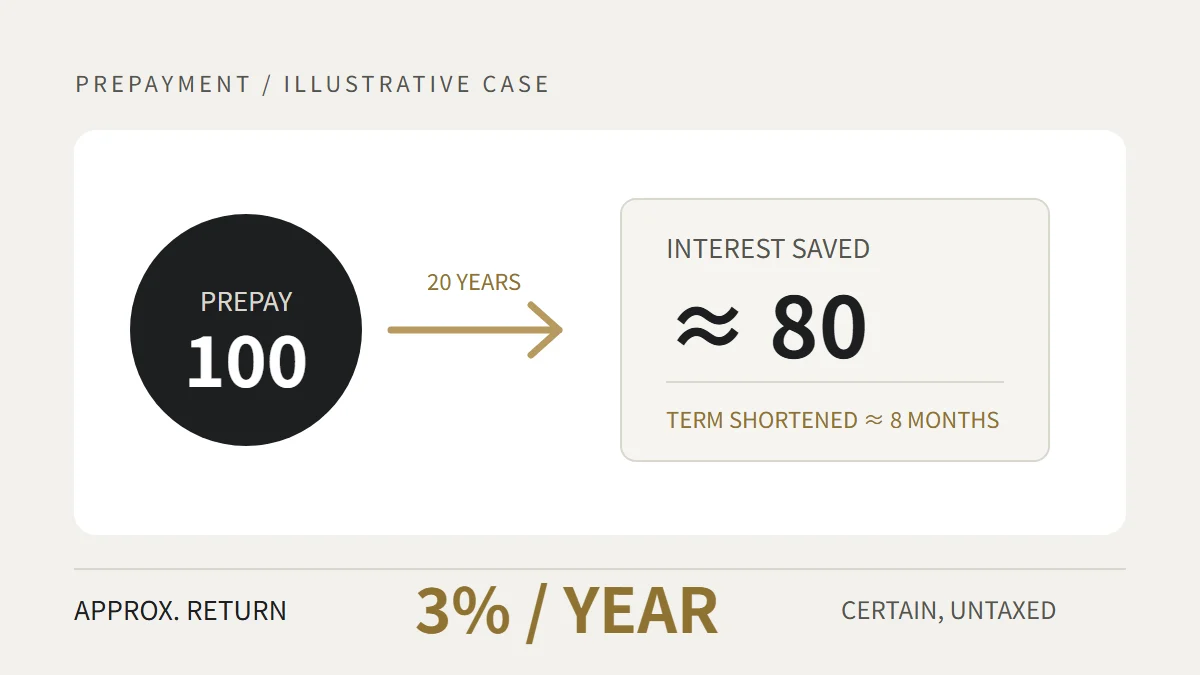
A remaining loan balance of ¥40 million, an interest rate of 3%, 20 years remaining. The monthly repayment is about ¥222,000.
Suppose you prepay ¥1 million here and choose the method that keeps the monthly repayment amount as it is and brings forward full repayment.
Full repayment comes about 8 months earlier.
8 months of repayments come to about ¥1.8 million. Of that, you put in ¥1 million yourself, so what you saved is the difference, about ¥800,000.
If you think of it as ¥1 million becoming ¥1.8 million over 20 years, that is roughly 3% a year.
Have you noticed? It is the same as the interest rate on the loan.
This is not a coincidence. Prepaying a loan means gaining the interest you no longer have to pay, so the yield matches the interest rate.
What is more, no tax is charged on this 3%. Profit earned from investing is taxed, but no tax is charged on an expense you did not have to pay.
And it is certain. However the market moves, this ¥800,000 does not change.
Certain, tax-free, and a yield equal to the interest rate. There are not many products like that.
So prepaying your loan is right. I do not think this is a point to nitpick.
Even so, the reason not to put in the full amount
If it is right, why does it not become "let's put it all in" in practice?
Because you are handing over something apart from the interest.
When you prepay, that money changes its registry. The ¥1 million that was in your bankbook turns into a reduction in liabilities. The total of your assets is the same, but it can no longer be used.
And money you have paid back once does not come back.
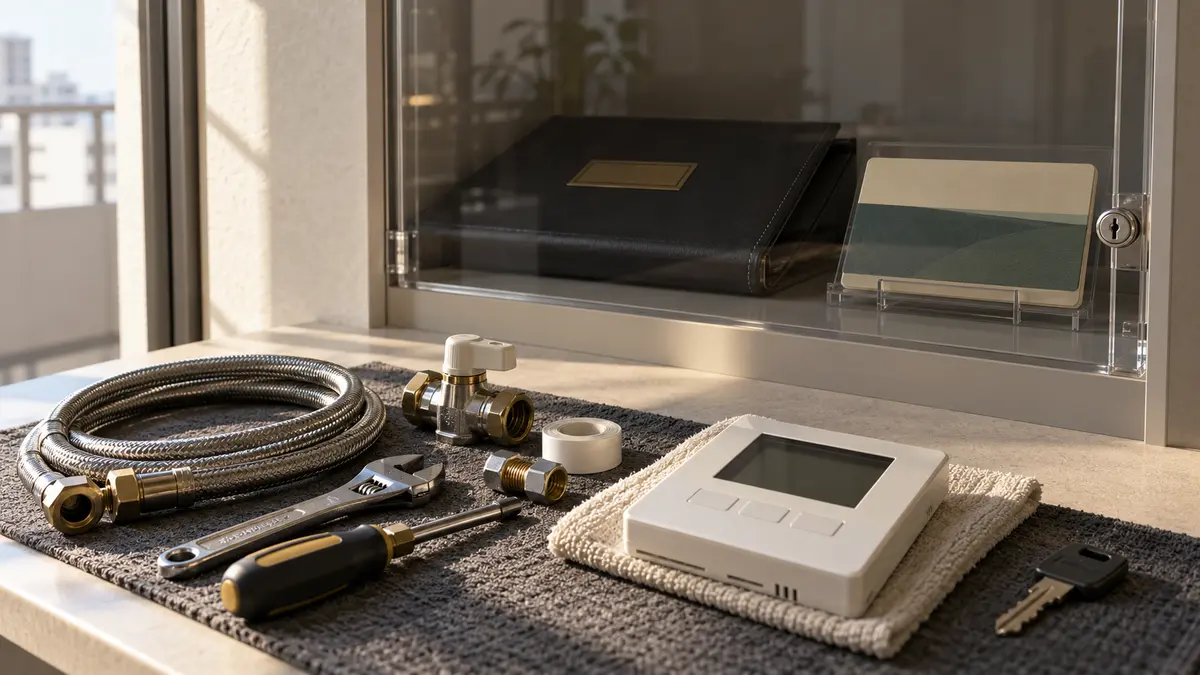
When vacancies pile up. When the water heater and the air conditioner break in the same year. When you decide to do a thorough restoration to place tenants.
What you need at those times is not a smaller remaining loan balance but cash.
People say, "In that case, you can just borrow again," but whether you can borrow at that point is a separate question. The screening is decided not by your record of past repayments but by your situation at that time.
If your loan comes with group credit life insurance (dantai shinyō seimei hoken), there is one more thing. That coverage amount is linked to the remaining loan balance. If you reduce the remaining loan balance, the coverage becomes smaller by that much.
Also, interest is an expense. If you reduce it, your expenses go down and your taxable income goes up. The effect of the prepayment is cut by that much.
None of these is a reason to stop prepaying. But I think it is better to know what you are handing over in exchange for saving the interest.
The deciding factor is not the interest rate but how thick your cash on hand is
Thinking this way, the order of the decision changes a little.
The first thing to look at is not the interest rate. Even after handing over that ¥1 million, how many more years can you hold out?
Set aside your emergency fund and the amount to prepare for repairs on the property first; what is left over on top of that becomes the funds for prepayment.
For people with thick cash on hand, prepayment is a certain, tax-free place to put money. For people with thin cash on hand, it means moving cash to a place where it cannot be used at the time they are most in trouble.
It is the same action, but its meaning is reversed.
And if you are thinking about the next property, a different calculation comes in. If you use ¥1 million for prepayment, you certainly get ¥800,000. If you use it for a down payment, it may become more than that, or it may fall below it.
A certain ¥800,000, or an uncertain something. Which to take is something you will think about by going back to the purpose you decided on at the start.
At this time of year, the street trees are all cut back at once.
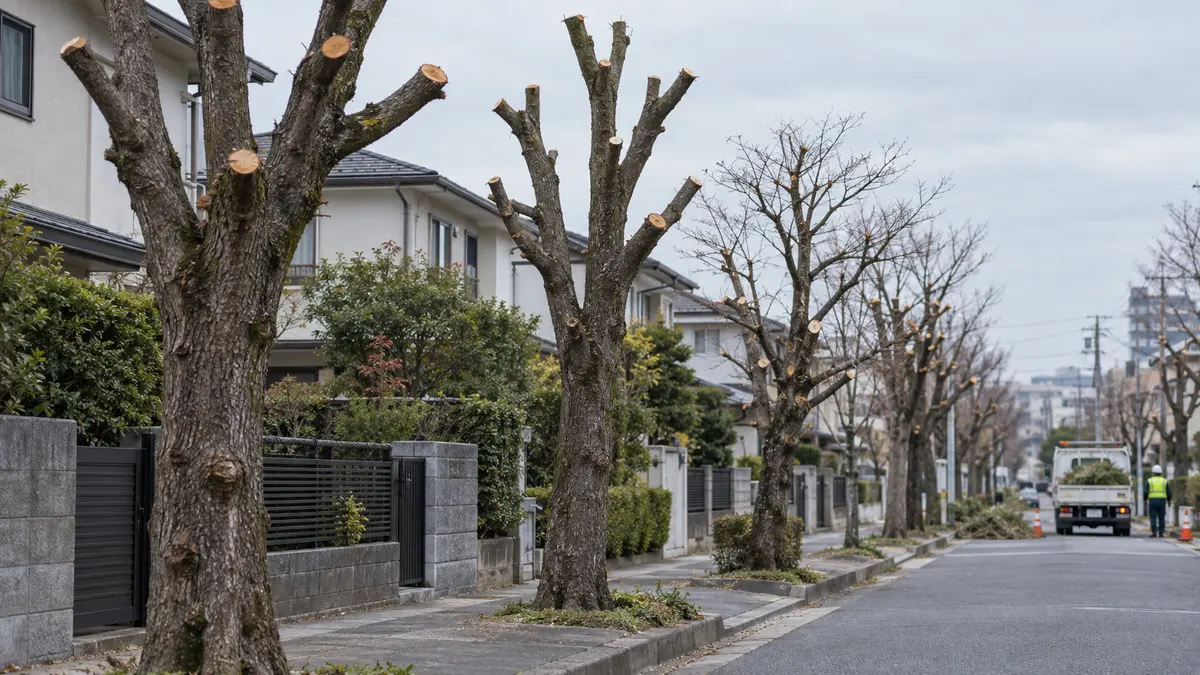
When I first saw it, I thought, do they really go that far? Some trees have almost no branches left.
Of course, that is probably right. Overgrown branches are dangerous, and cutting them makes the tree sturdier.
But apparently how you cut depends on the tree. I heard that if you cut a weakened tree deeply, the next year's buds may not come out.
Not whether cutting is right, but how far you can cut. That is probably what they are looking at.