Getting started in real estate investment
Where to start in real estate investment, in order. Each part uses the numbers from the one before, so read them from the top.
 BENERU navigator Nel Shikina
Good day, and nice to meet you. I’m Nel Shikina, BENERU’s navigator. Here I will guide those of you about to start investing in real estate on where to begin. First we get a clear picture of your own assets and circumstances, and then decide the purpose and plan of your investment. The articles are made so that you can work through them in the numbered order below and actually put them into practice, so please make good use of them.
BENERU writes for readers who live in Japan. Taxes, loans and the other rules described here are those of Japan, and they assume a resident of Japan.
-
What should you do first?
In real estate investment, the first thing to look at is not a property, but where you stand now and your own decision criteria.

-
Turning your assets into numbers
How to enter your home, insurance, car, pension and loans on a personal BS. Work out your net worth from current values and debts, and sort out how much money you can actually move.

-
It's not about how much is left each month
A monthly surplus alone does not tell you your capacity to invest. Put your annual income and expenses, emergency fund, investment capital and tolerance for out-of-pocket payments in a deficit into numbers.

-
When the purpose differs, the same numbers give a different answer
Monthly cash, net worth, or a specific function. What you prioritize changes the answer for the same numbers. Using a comparison of loan terms, we sort out how to set a purpose and a plan.

-
What you can borrow and what you should borrow are different
The amount a lender can lend and the amount of borrowing you can bear are separate. We sort out how to work backwards from your out-of-pocket tolerance to a borrowing limit, and how to look not only at the interest rate but at the loan term and annual repayment.

-
The yield in the brochure is not your number yet
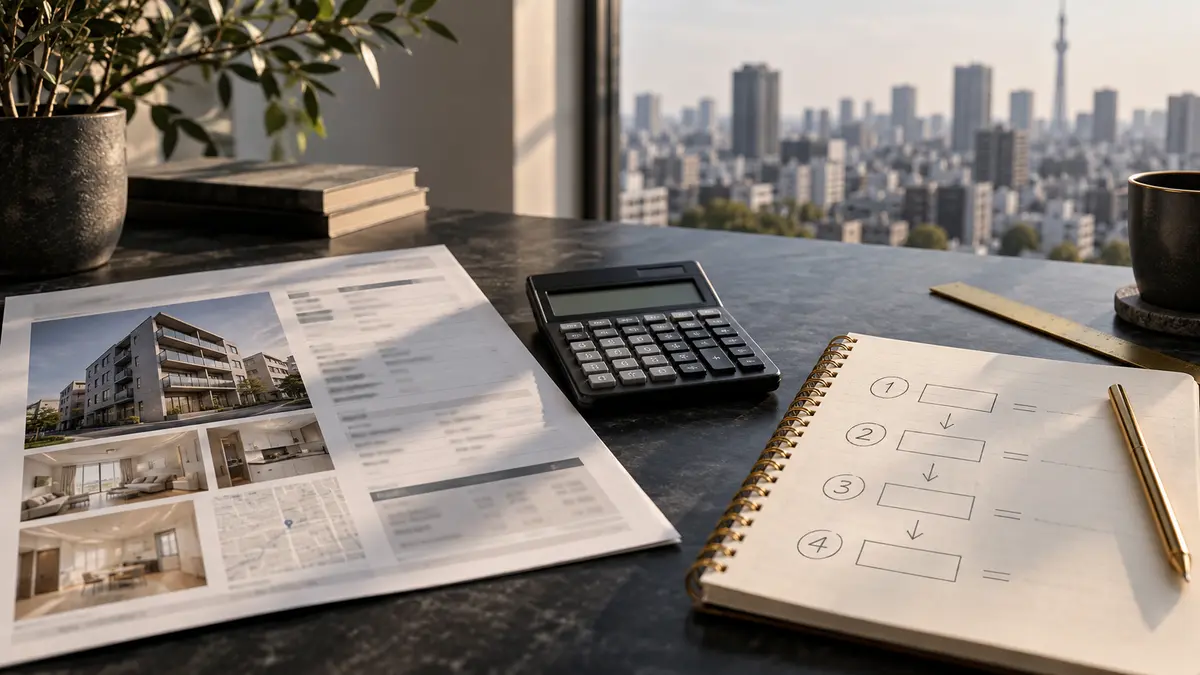
Starting from the gross yield, subtract vacancies, expenses and loan repayments in turn, and convert it into a number measured against the money you actually put in.
-
The same property gives you 5 different yields
We show why a single property produces 5 different yields, how to align the numerator and denominator when comparing, and why the final decision should go back to amounts in yen.

-
What you know will happen is not a risk
We sort things into 3 layers: costs you know will occur, uncertainties you prepare for by their range, and losses you cannot carry yourself.

-
A decision not to buy can be undone
Check the property against your own funds, your borrowing limit and your out-of-pocket limit, and confirm that you can keep managing it. Record the conditions for passing and the reasons for your decision, and carry them into the next one.

-
Fix the exit, and you are betting on it
We check whether a property is "sellable" through the cash left after a sale, financing for the next buyer, and keeping documents in order. We also set out a once-a-year review, and how to think about selling by conditions rather than by date.

-
There is no such thing as a good investment
Before comparing condominium units and whole buildings, we sort out what "safety" means and what it costs. From your own cash, your yearly surplus and your out-of-pocket limit, we think about which risks you can take on.

-
You think you are buying a room. You are buying voting rights.
We sort out what you can decide for yourself as the owner of a condominium unit, and what you leave to the owners' association. We show the numbers for a year with a tenant move-out, and the documents to check before you buy.

-
Even with 8 units, it is still one bet
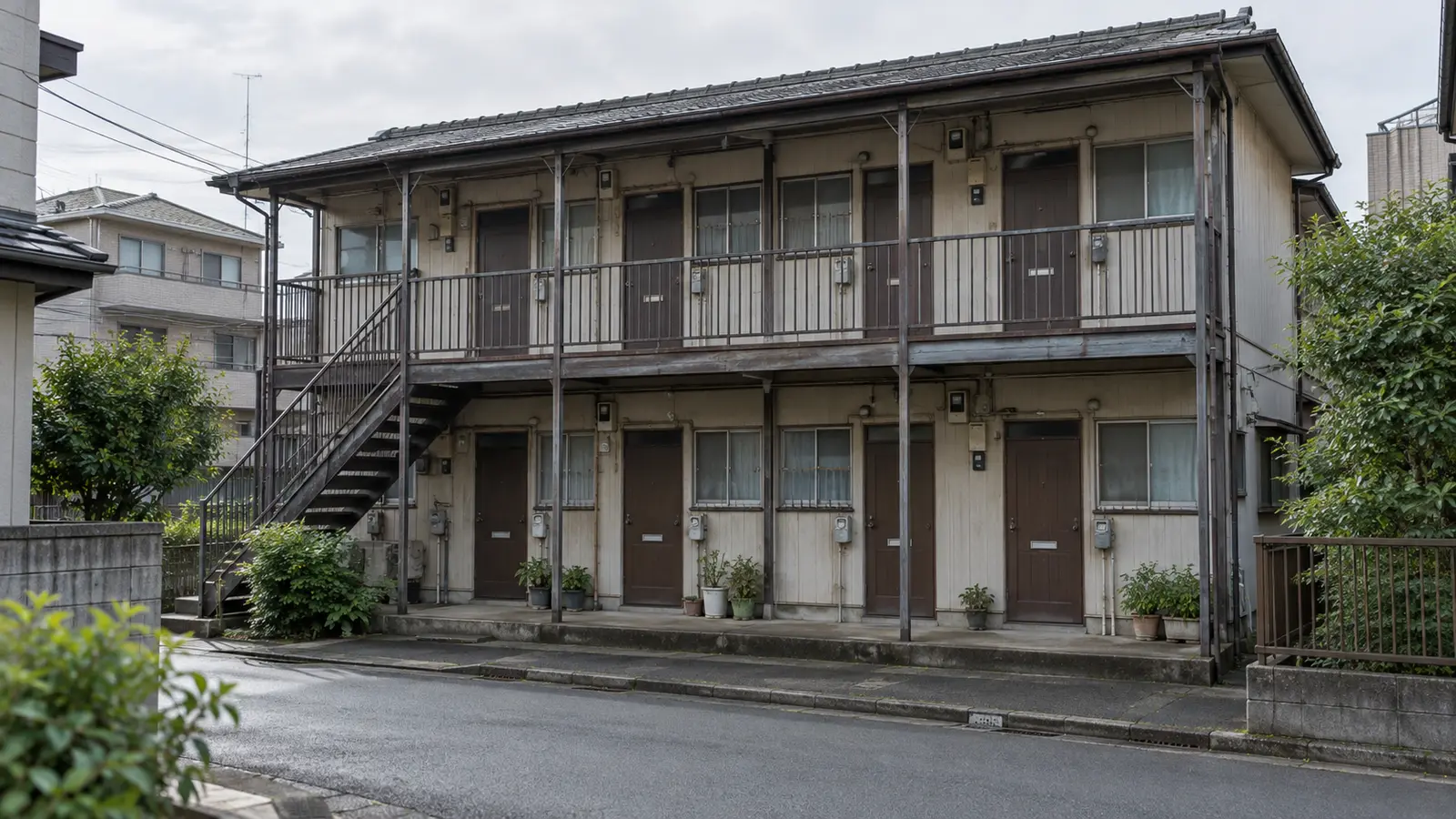
We sort out the operational freedom of a whole building, the burden of repairs you must set aside for yourself, the demand factors shared by all 8 units, and how the loan term affects the numbers.
-
Fixing own funds at ¥13.5 million and setting 3 options side by side
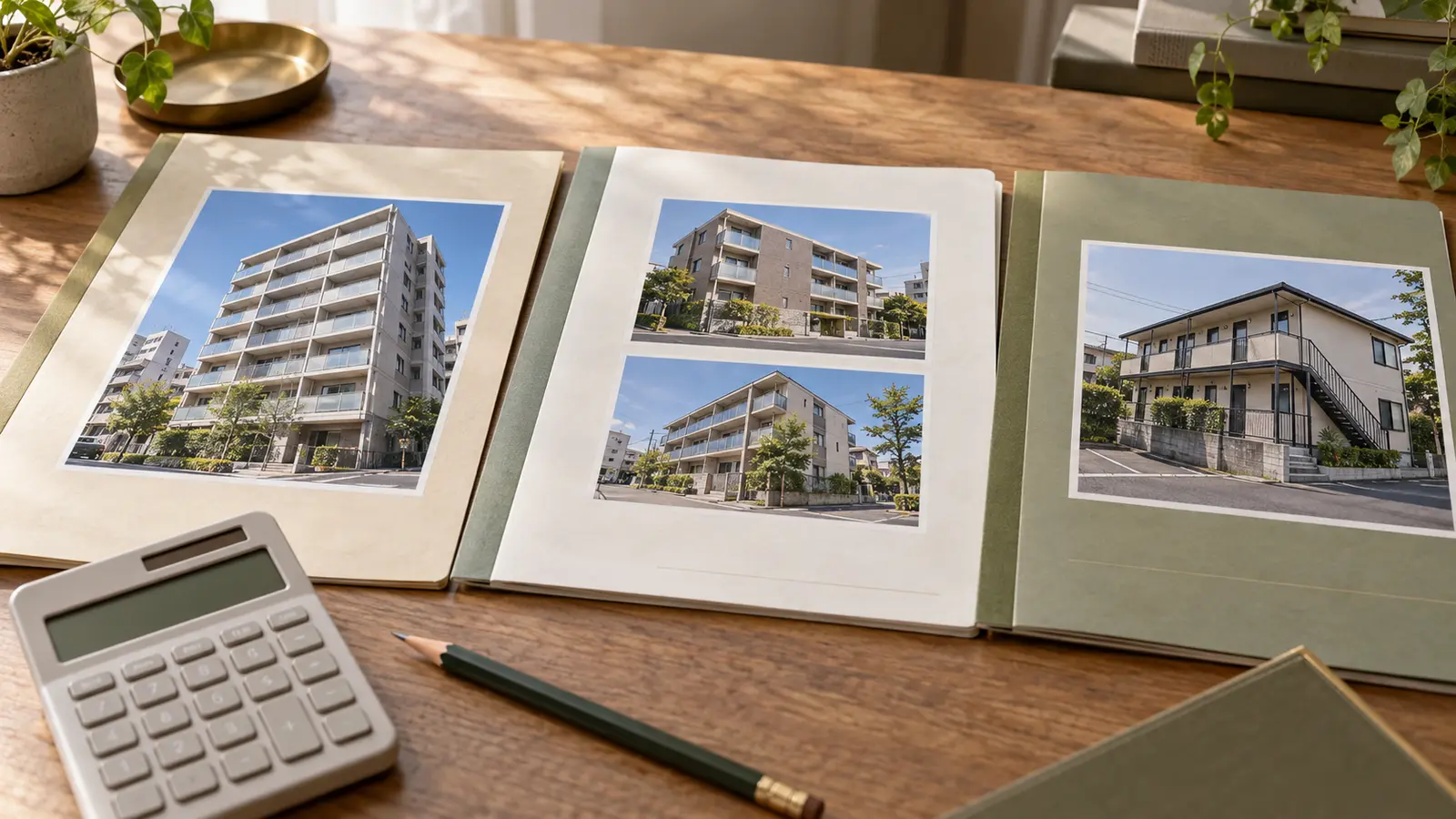
With the same own funds, we compare 1 condominium unit, 2 condominium units and a whole building. We look separately at annual cash, principal repayment, and resilience to vacancy and rising interest rates.
-
If you compare only what can be compared, you fail on what cannot
We organize the differences between condominium units and whole buildings along 5 axes, and show how to compare not only the numbers but also time and exit, in writing.

-
With the same ¥13.5 million, two people reach different answers
Even with the same own funds, the answer changes with your out-of-pocket limit and the time you can use. Using two fictional examples, we show the steps for checking your own conditions against the 5 axes.

-
A contract is not signed all at once
When you buy a property with financing, there are 4 moments when you sign. The other party, what gets decided, and what you need to check if you want to back out are different each of the 4 times. We start by drawing a map of what stops being movable at each stage.

-
A letter of intent to purchase does not bind the other party
An ordinary letter of intent to purchase has no power to bind the other party. But the terms you write in it become, as they are, the draft of the sale contract. After separating what binds and what does not, we organize the items to write down and how to handle a request for an application deposit.

-
The rules that protect you depend on the seller
The cap on earnest money, the cap on penalties, the limits on special clauses about liability for non-conformity. The buyer protections in the Building Lots and Buildings Transaction Business Act work only when a licensed real estate broker is itself the seller. The seller of an income property is often not a licensed broker, and what remains then is the Civil Code and special clauses. We organize where to check in the sale contract.

-
You can lose the right to repay in installments
At the 3rd signing, the other party changes to the lender. You sign not one document but several, and at the same time you put up collateral and receive a conditional right called the "benefit of time." We organize how the path to lump-sum repayment is not a single step, and which items to compare besides the interest rate.

-
Settlement day is also the day of adjustments
On the day you pay the balance, 7 things move almost at once. The adjustments for fixed asset tax, rent and security deposits are not a matter of splitting the bill. We organize the basis on which registration costs are calculated, and which costs do not appear on that day.

-
Some things don't change when the name does
Some work starts the day after settlement. Notifying tenants, taking over management, switching fire insurance. Taxes that arrive later, and a single line in the contract that comes into play in your first year's tax return. We deal with what comes after the 4 signings.