
I heard in a video that "real estate investment fraud is rampant." Is it true?
Information about real estate investment, both the stories of making money and the stories that it is fraud, is both correct and both exaggerated. I write about the structure of returns in studio condominium investment, and the difference between "being deceived" and "not understanding."

BENERU writes for readers who live in Japan. Taxes, loans and the other rules described here are those of Japan, and they assume a resident of Japan.
This page is a translation of the Japanese original. If the two differ, the Japanese original prevails.
I answered this question on a Q&A site.
Is there anyone who does real estate investment? In a certain video, they said real estate fraud is rampant in Japan. Is investment fraud involving studio units and subleases real?
I will answer as a specialist.
The content of videos like that is both correct and wrong.
First, all the information about real estate investment that you come across is correct. That is, it is a fact that there is real estate investment bordering on fraud, and that studio condominium investment does not make money. At the same time, it is also a fact on the other hand that there are people earning returns from studio condominium investment.
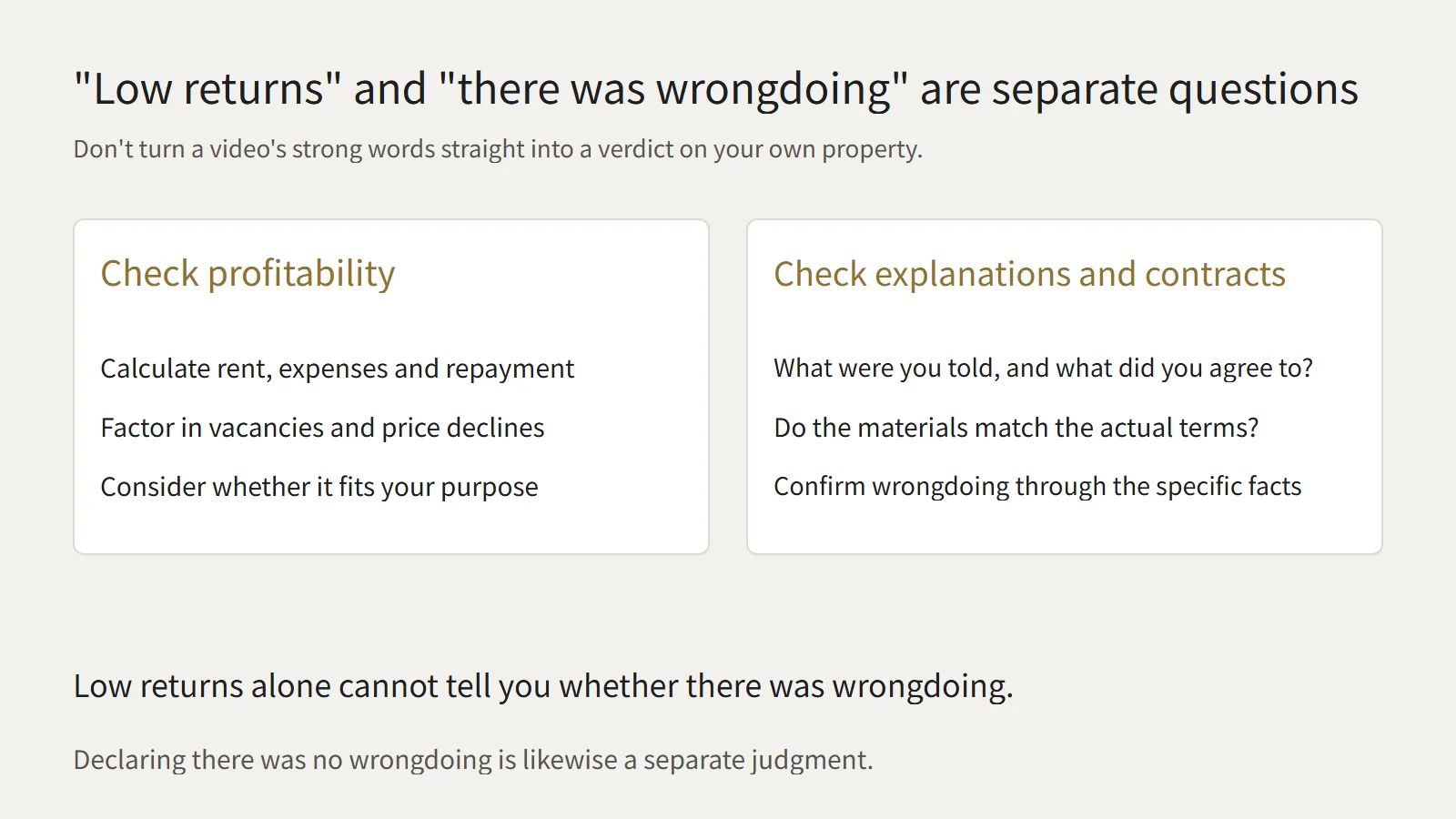
Then how can this information, which at first glance holds contradictions, stand side by side?
It is because each of them "exaggerates."
Think of a video as a visual work made for the purpose of being watched. It has to be interesting. To make it interesting, viewers are happier if anxiety is stirred up. So you can think of it as no more than staging to liven up the content.
There are probably no investors actually making a profit from income properties who swallow such videos whole. When they see people in the videos selling in a hurry, honestly, they just look on with pity, thinking how unfortunate.
Taking out a cash advance to close out the position is locking in a loss, so no investor would be foolish enough to choose it.
If you can borrow money from an acquaintance with no interest payments, you just need to make a prepayment and wipe out the negative cash flow. The remaining loan balance decreases with time, so if you sell at the timing when the balance sheet evens out, you won't have out-of-pocket costs.
There is no problem at all if you can't understand the above. People who don't do income properties have no need to understand it. However, if there is someone who doesn't understand the above but owns a property, that is a problem. They had better study.
Is studio condominium investment fraud?
Now, many people probably wonder whether studio condominium investment is fraud or not, so let me give the answer.
For every investment, there is no such thing as a good investment or a bad investment. All there is, is risk and return. If you take risk there is profit, and if you don't take risk it is merely safe.
Studio condominium investment is, by nature, an investment with extremely low profitability.
The merit of real estate investment is investing by making use of borrowing. This is thought of as using other people's capital, using credit.
The real reason the number of people choosing real estate investment is increasing lies in Japan's low borrowing interest rates. The merit is that if you raise funds and invest, you can gain the difference in investment returns.
To begin with, it is such a plain and basic story that the fraud stories hyped up in videos appear nowhere in it.
It is a way of thinking that has been taken for granted since long ago, so much so that it is discussed even in a famous investment book that was popular more than 20 years ago.
It is the idea of borrowing at an extremely low loan interest rate of around 1.6% as of the time of writing (2024) and investing in a financial product with a yield of around 4%. If interest rates rise, this gap narrows.
I think you can understand that there is a profit from the difference even after taking expenses into account. When people who do it say studio units don't make money, they are only saying "the returns are low."
People who lump studio condominium investment together as "net worth structurally does not increase" either lack understanding or are talking without having played. Through repayment, the debt decreases every month. If the decline in the property's value is slower than that, net worth increases. If it is the other way around, it does not. Which is faster depends on the property.
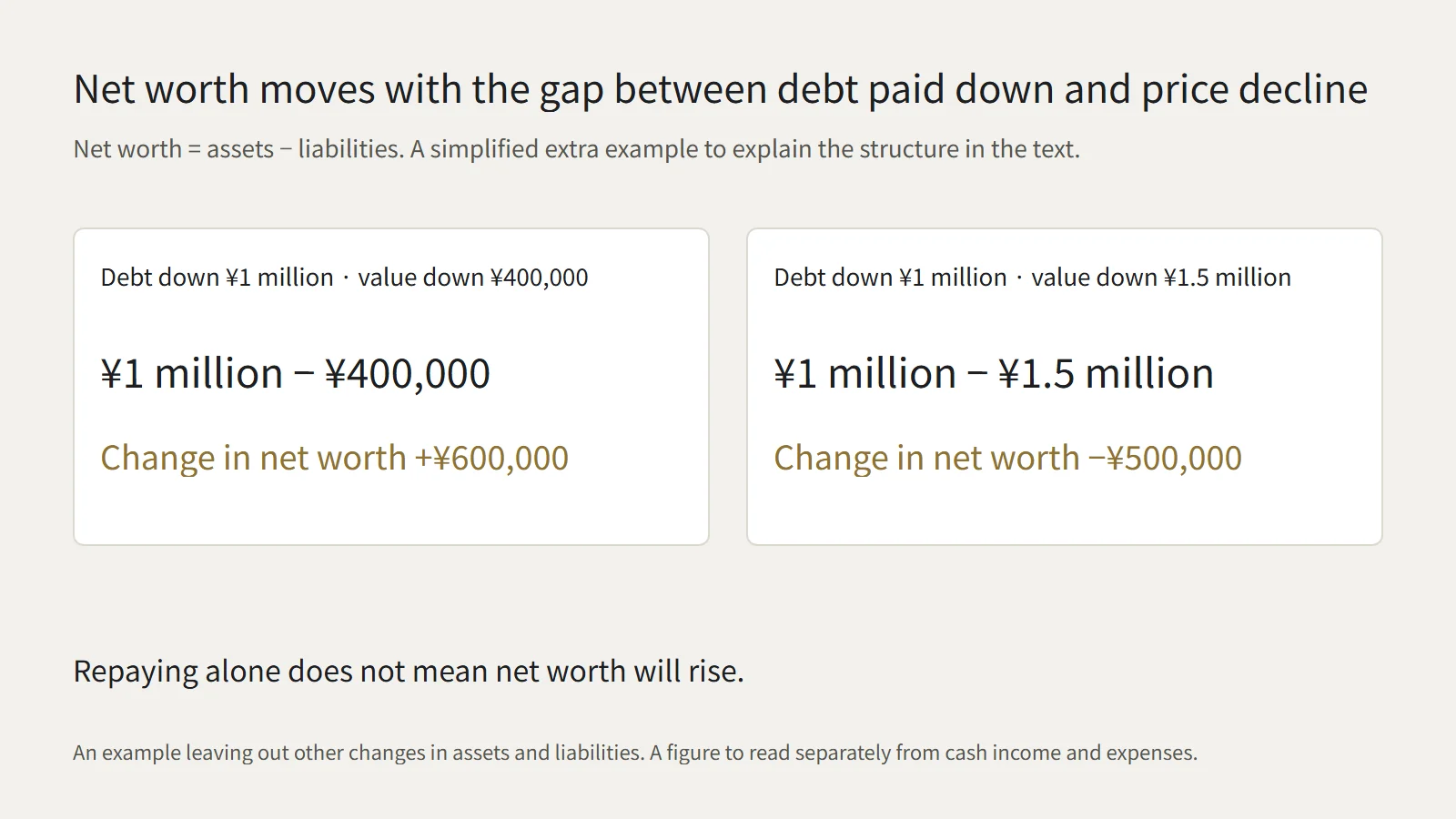
Were they deceived, or do they not understand?
If people experienced in real estate investment keep extending their own knowledge and experience, they will naturally be able to manage even high-yield products well.
The large-scale landlords who appear in videos are such people.
The past 10 years have also been a tailwind in terms of the market for property prices, but that they were able to make a profit from income properties is a manifestation of their literacy itself.
They learned on their own, raised their experience through practice, and only after gaining solid understanding did they take on high-yield products.
Those who, without that much resolve, take it on without really understanding and then scream "this is not what I expected" are the self-proclaimed deceived.
Most of them have not been "deceived." They simply lack understanding. They don't even understand that the profit from an income property is net worth.
I also skimmed through online Q&A sites, and it doesn't seem much different. There are a great many people who lack even basic financial literacy.
If you read this text and don't really understand it, you had better not consider using credit.
You surely understand that there is no story where you make money just by watching with your finger in your mouth.
How to deal with information
When you take in information, take in both the clean and the murky. Always come into contact with it without forgetting to "doubt." Being correct is a relative idea. You will never come into contact with something called "correct."
"Your correct knowledge" is built from the accumulation of investment knowledge you have gained. Decide for yourself whether things are genuine or fake.
I say this to everyone. There is no such thing as a good investment, and there is also no such thing as a bad investment. If you don't bite at money-making stories with a lustful grin, you won't fall for fraud stories either.
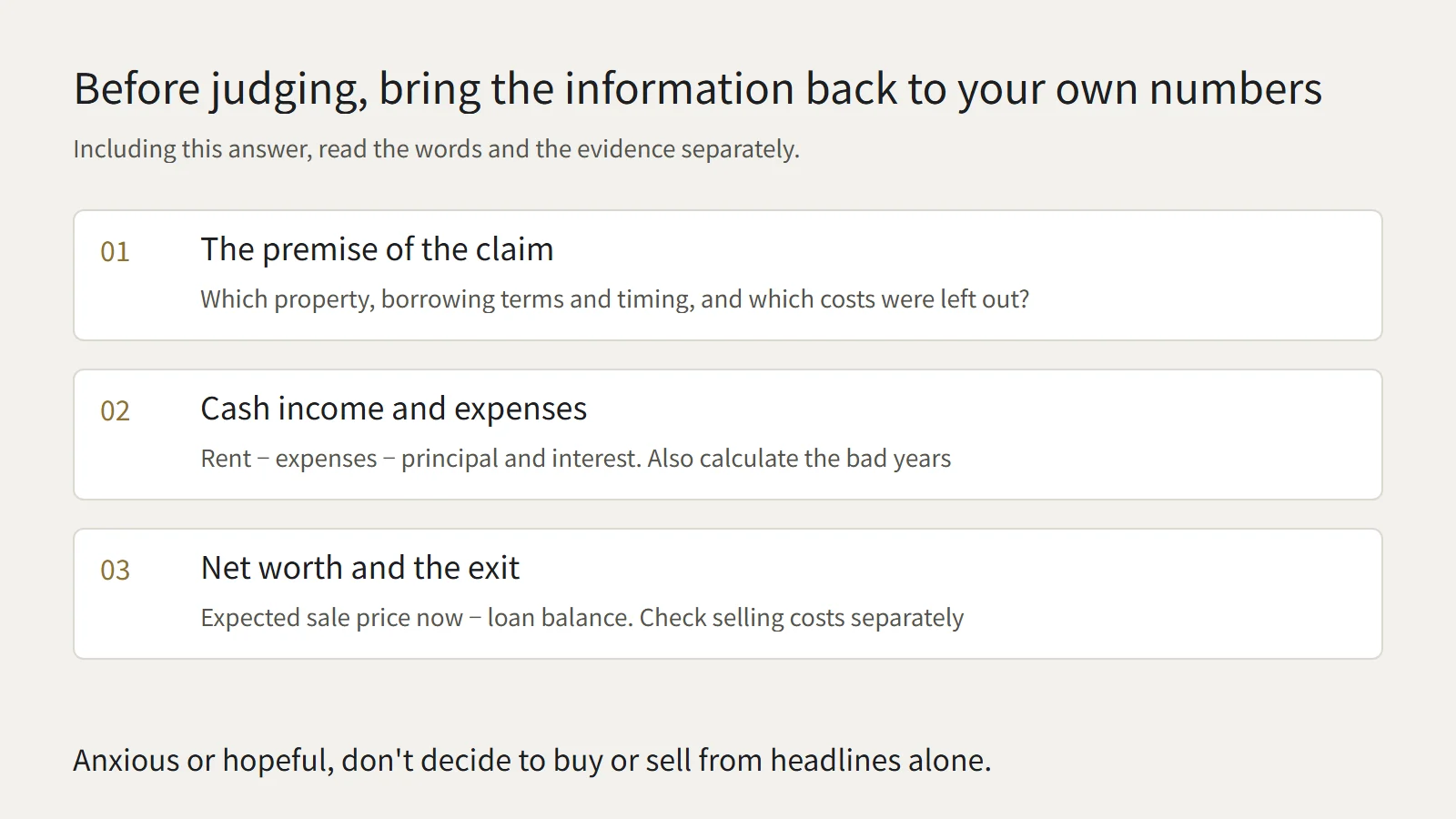
Not just videos: please come into contact with all information, including what is written here, in the frame of mind I have just described.