Did the bank that made headlines over fraudulent lending have a bad reputation from before?
The lending standards of the regional bank that made headlines over fraudulent lending were, if anything, strict. The ones who mainly handled the falsification of documents were the real estate companies that brought clients in. Together with the facts found regarding the bank's own involvement, I write my view as the author.

BENERU writes for readers who live in Japan. Taxes, loans and the other rules described here are those of Japan, and they assume a resident of Japan.
This page is a translation of the Japanese original. If the two differ, the Japanese original prevails.
I answered this question on a Q&A site.
I'd like to ask the president of a real estate company, or someone who knows real estate well. That bank whose fraudulent lending made the news—did it have a bad reputation from before? Are other banks also doing things like falsifying rent rolls in the same way?
I will answer as a specialist.
The bank that made the news is one of the regional banks. Most of you are probably not familiar with them, so I will explain in order.
The major city banks you all know well are, I think, banks that come to mind right away because you carry their cards.
In contrast to these city banks, the regional banks are the ones that operate with regional cities as their market.
If you have a hometown, there is probably a bank bearing the name of that prefecture or place. The bank in question is one of these regional banks.
Where regional banks stand
By the way, what is a bank?
Do you know the difference between a bank and a non-bank? You often hear the word "non-bank," and for loans handled by individuals, you may hear about non-banks more often. Affiliates of consumer credit companies or leasing companies and so on—haven't you heard their names somewhere?
Now, the reason I am writing this is that I want you to stretch your imagination to where regional banks stand.
Banks lend money and earn the interest as revenue. From a bank's point of view, real estate secured loans can be called a stable market in which it can lend after hedging its risk. Squeezed between the major banks and the non-banks, regional banks are in a position where they need a lending market for the sake of revenue.
Please read on with this position of regional banks in the real estate market in mind.
The bank in question's lending was strict
Now, to the main point.
As a lender for real estate investment, the bank in question certainly played a major role.
Its lending stance narrowed the target to high-status employees only, and it made its presence felt with apartment loans using property valuations that gave priority to the income capitalization approach.
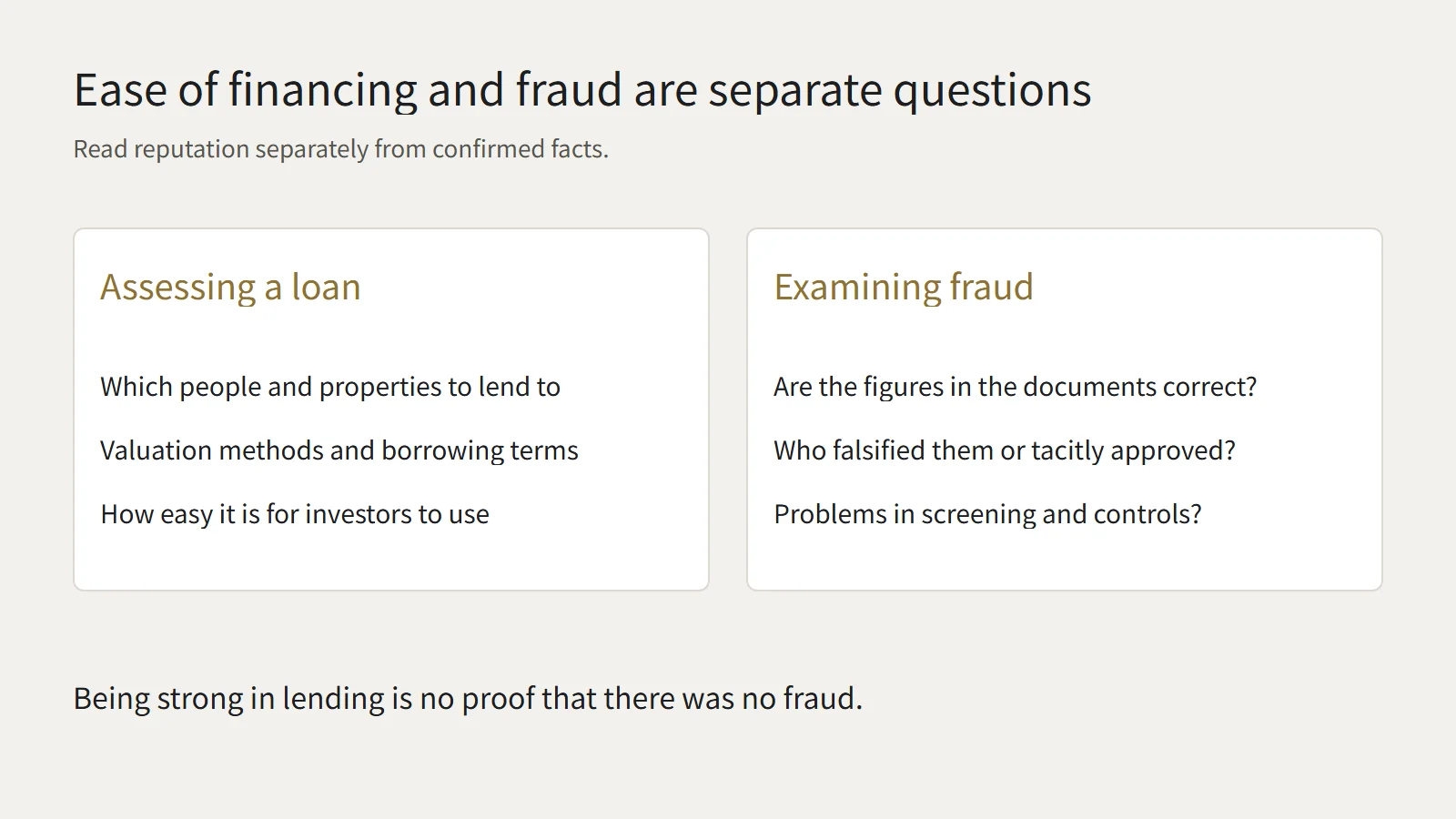
The news of that fraudulent lending may have spread the impression that it was "lending fraudulently to anyone," but it was the exact opposite. The bank in question's lending standards were bound to high-status borrowers, and in the industry those are strict standards.
If a non-bank's lending conditions look at an annual income level of around ¥5.5 million and total borrowing of around 10 times that, the bank in question required an annual income of ¥7 million. And it looked at total borrowing of up to 40 times. That means you could borrow ¥200 million.
For taking on a large-priced apartment building, the bank in question was ideal.
If you don't understand what some of the finer expressions mean, just skim past them.
In other words, "the bank in question's lending conditions are quite strict."
Was its reputation bad?
I don't know what "reputation" in the question refers to, but if it means a bad reputation, then neither now nor in the past has it had a bad reputation in the real estate industry.
"What? It got into huge trouble over fraudulent lending."
That is what you will think. But it is a fact. Setting aside whether I will ever write about it in the future, that fraudulent lending case was like the bank in question drawing the joker in the collapse of a share house business.
As a bank, it is very aggressive, with a corporate culture that feels closer to the mood of a securities company than a bank. How you feel about that culture is up to each person, but I don't think anyone involved in real estate has that bad an impression of it.
If a bank is something that takes in both the clean and the murky, then the bank in question was exactly that.
Now, the answer to the question: did the bank in question have a bad reputation from before? No. Its reputation was not bad before, and its reputation is not bad now.
It is a bank that is strong in real estate and has the know-how of knowing the market well.
I'm sure it will stubbornly make a comeback in the market again.
Who did the falsifying?
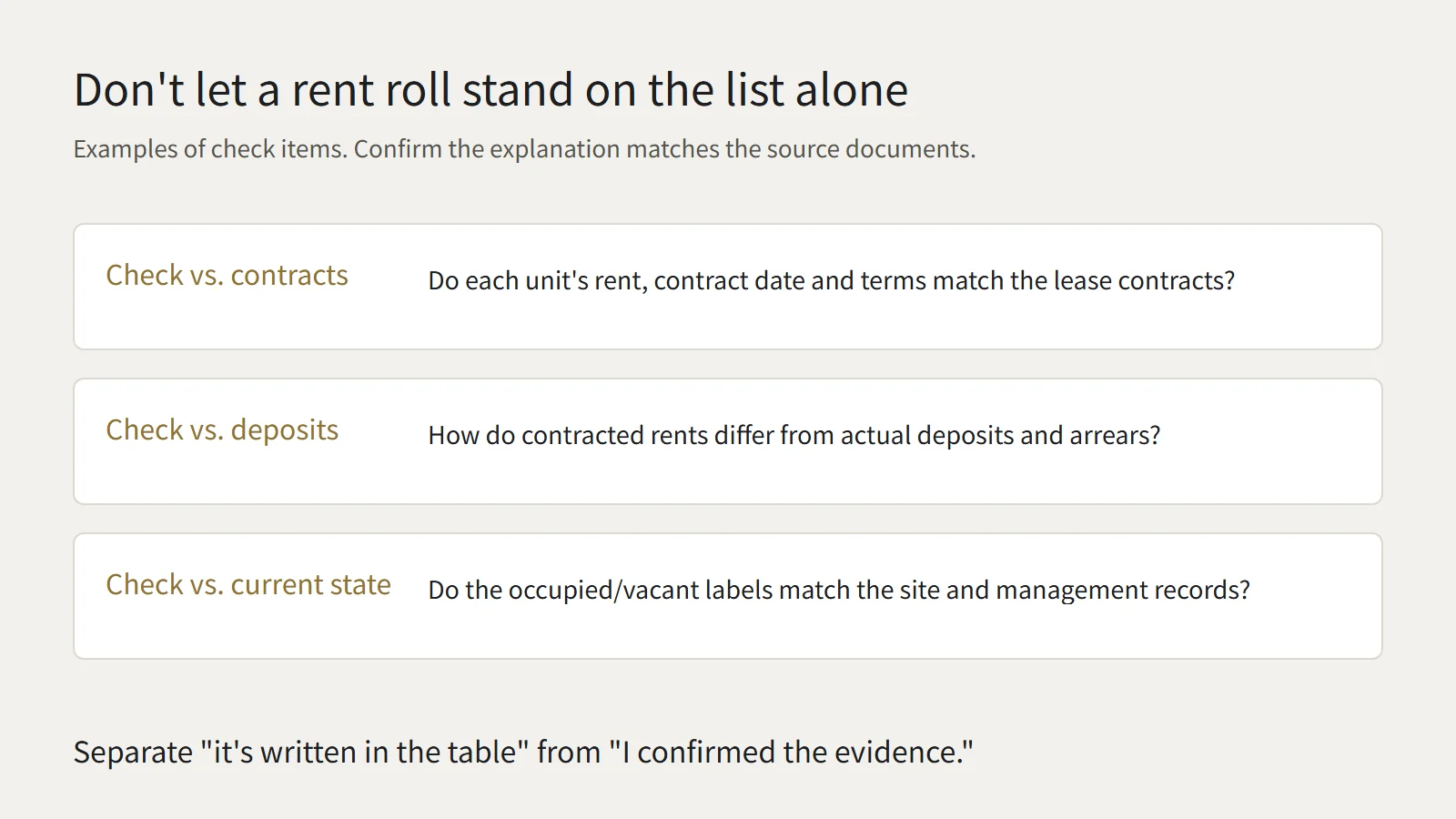
Then there is the question of what other banks are like, but most of the falsification of rent rolls was not handled by banks.
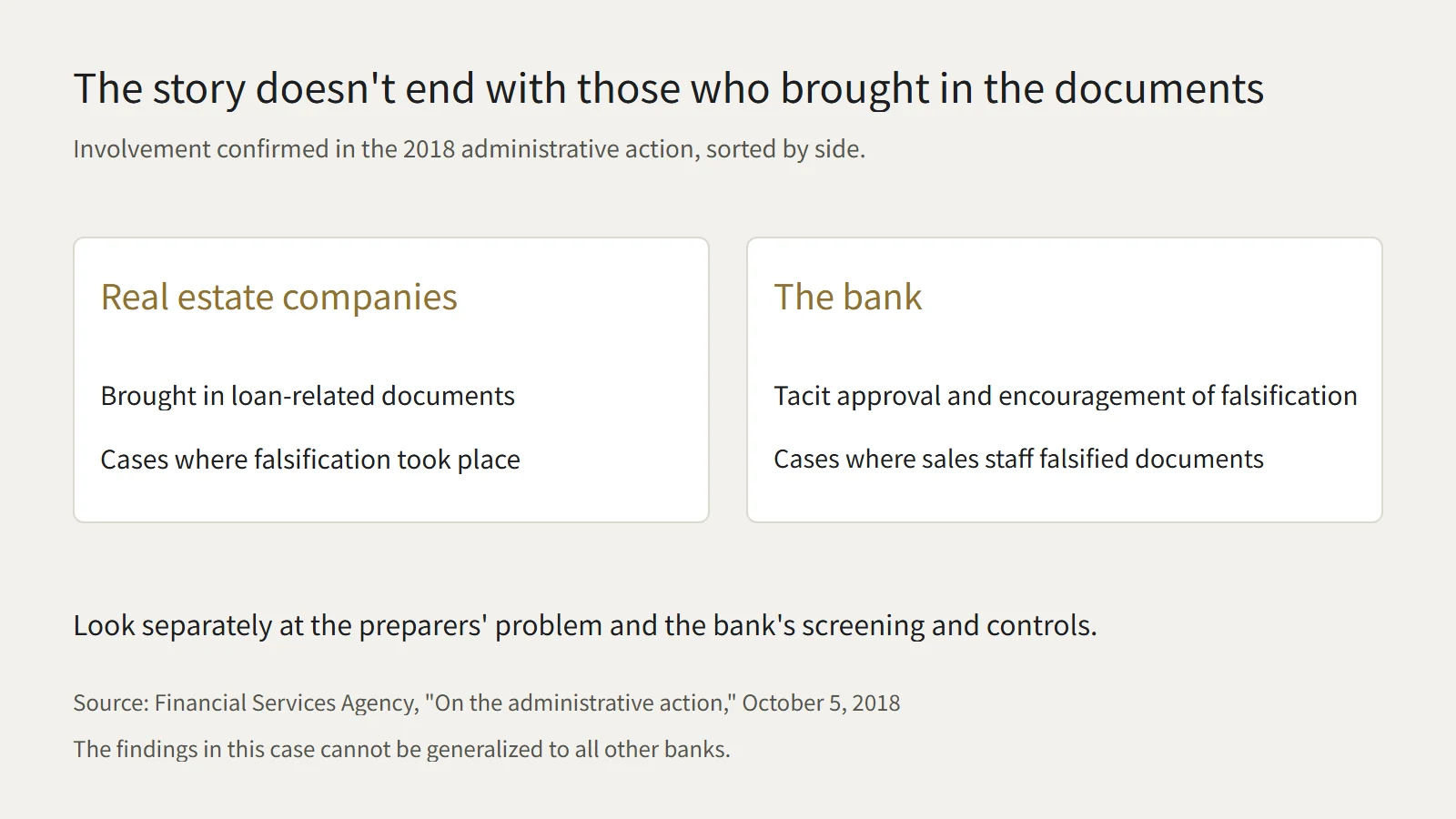
The ones mainly falsifying documents were the real estate companies that brought clients to the bank. That difference is large. There must be no misunderstanding here.
That said, it is not that the bank's side had nothing to do with it. The third-party committee's report found that sales staff tacitly approved of the falsification, that in some cases they were themselves involved in the forgery, and even the direct involvement of branch managers and 1 executive officer. The Financial Services Agency also found cases in which bank employees did the falsifying themselves.
On the other hand, it is said that there is no evidence that top management knew of the individual frauds. It is impossible for a company to order the forgery of private documents for the sake of loans, and it is not a trade-off that balances against the risk.
Well, it is a case on which all the parties involved will have plenty to say, but there is only one thing I want to say.
"The bank in question is being spoken of a little too badly."
Even the bank in question did not order falsification as a company, so you can guess what the other lenders are like.