
If an inherited apartment building has a tenant with no written contract, can you get them to move out?
Even without a written contract, a lease is formed if there is agreement to lend, to rent, and to pay rent, and the person who inherits takes over the lessor's position. This piece covers where to start as the new owner before asking a tenant to move out.
BENERU writes for readers who live in Japan. Taxes, loans and the other rules described here are those of Japan, and they assume a resident of Japan.
This page is a translation of the Japanese original. If the two differ, the Japanese original prevails.
I answered a question like this on a Q&A site.
I inherited an apartment building that is more than 50 years old, but there are no lease contracts with the residents. Should I proceed with eviction negotiations together with a lawyer, or should I, the owner, handle them myself? There is also no real estate company managing the property.
So you'd be a rookie owner of an income property, huh?
First, let's get you to understand this thing called the lessor's responsibility, okay?
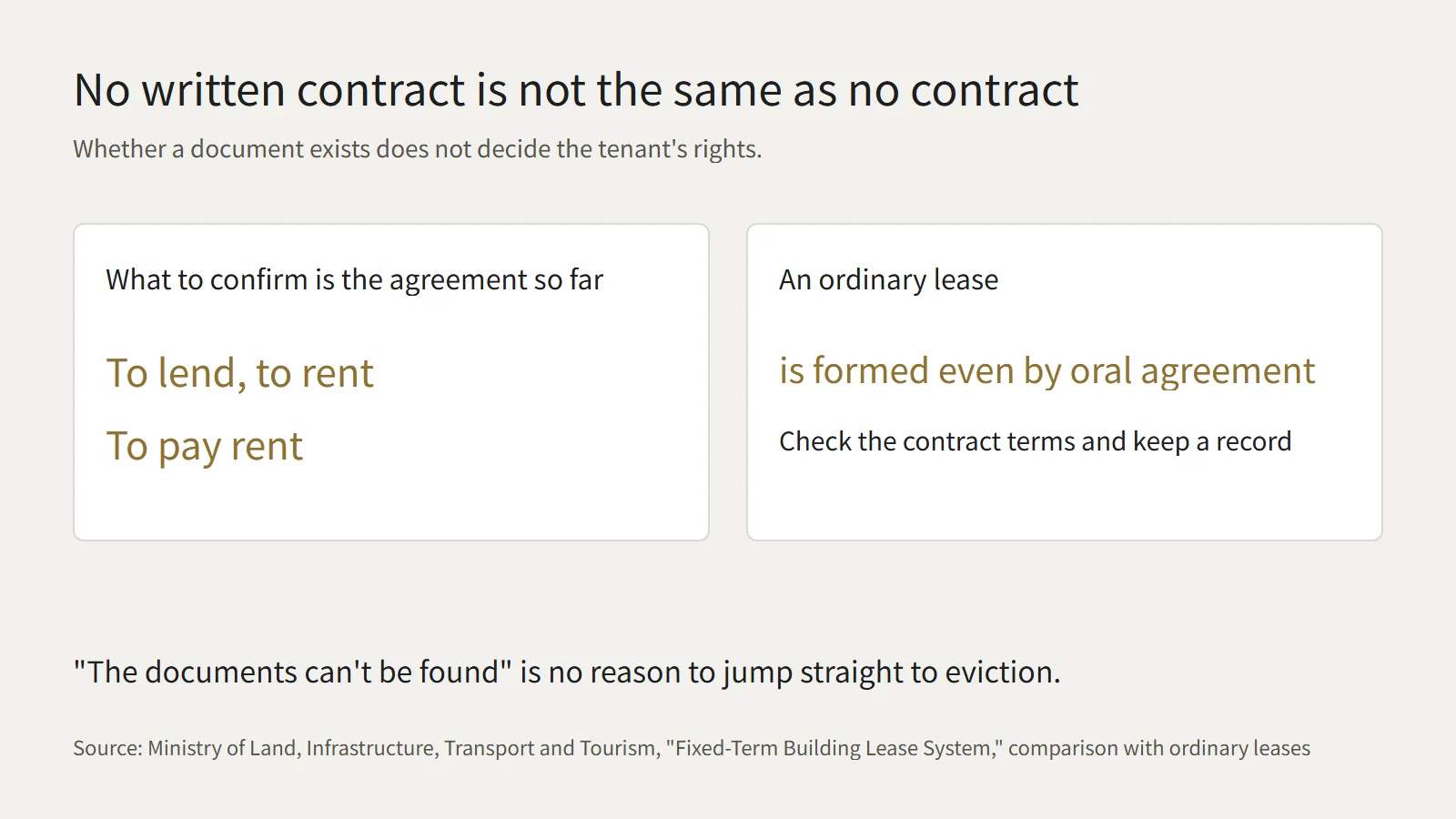
No written contract, but there is a contract
If that lessee is paying rent, they're fulfilling their duties as a tenant. The one who didn't make the contractual relationship clear was the previous owner, not the lessee, right?
Even without a written contract, if there's agreement to lend, to rent, and to pay rent, the lease is formed. You, having inherited, have taken over that lessor's position as it is. The contract itself has long been valid, so I don't think any fault on the lessee's side would be recognized.
So, to begin with, "I want to get them out" is pretty unjust.
Well, I get it. The building is old, and you probably have reasons like wanting to rebuild or sell. But look, the lessee has reasons too, right?
If the lessee came to me with this, here's what I'd tell them: "You're protected by the Act on Land and Building Leases (Shakuchi Shakuya Hō), so just sit tight and keep living there. You're paying rent, right? Then there's nothing to worry about. Your right of lease has long been recognized. If anything happens, let me know. We'll get a representative and fight it."
Do you see?
Asking them to move out is a bad move right from the start.
The first thing to do is say hello
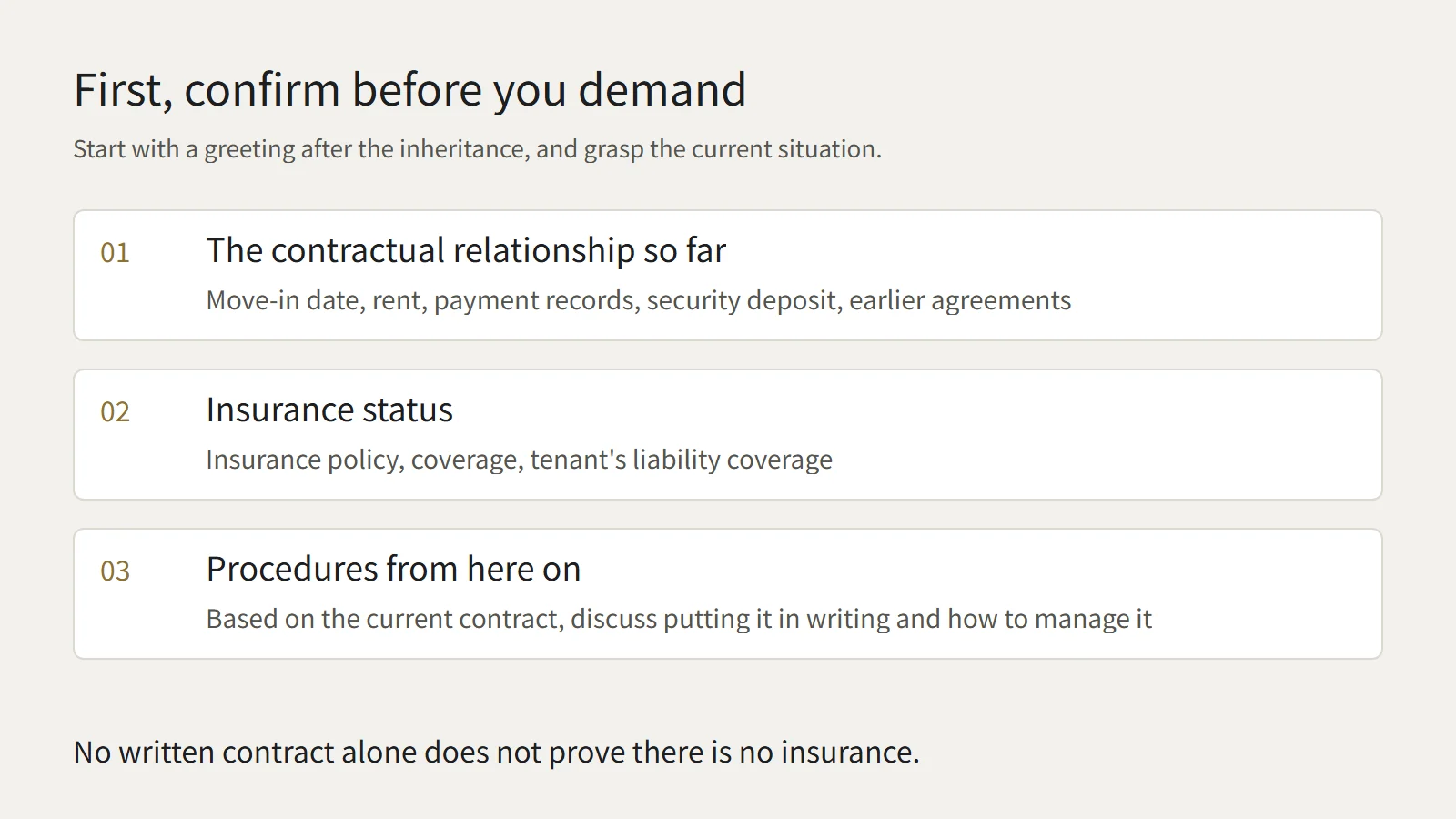
It's good to just go and say hello: "I've inherited the property and become its new owner. Going forward, I'd like to put a proper contractual relationship in place."
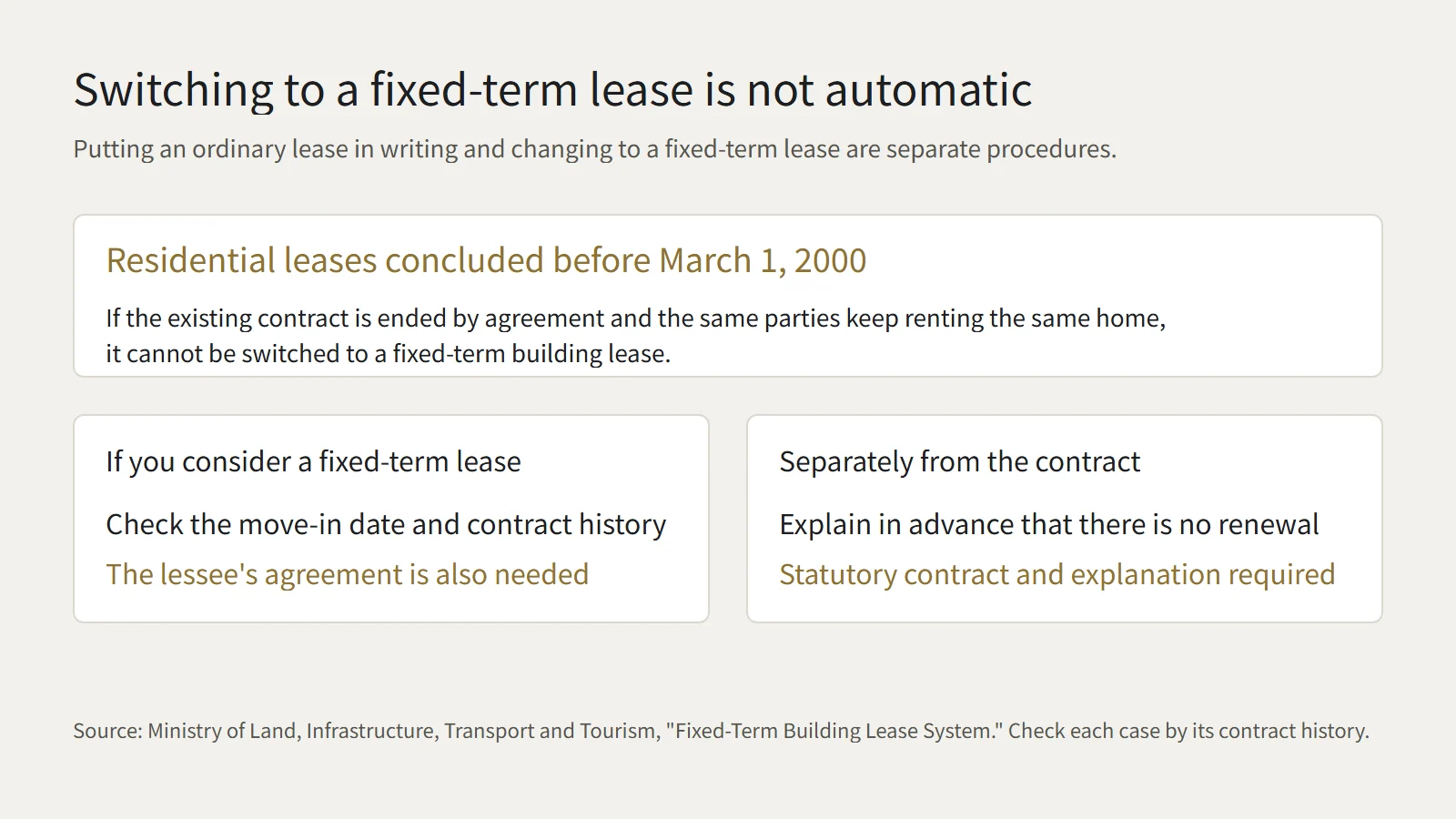
Then, if you want to keep demolition in mind, you can sign a contract as a "fixed-term building lease."
But if that lessee signed a contract and has been living there since before March 1, 2000 (Heisei 12), it's a different story. Residential leases from back then can't be switched to a fixed-term building lease even if both sides agree. Also, a fixed-term building lease isn't formed unless you sign a written contract and first explain, in a document separate from the contract, that there's no renewal. Miss either, and it stays an ordinary lease.
Start with insurance
The concern for you right now is that the lessee probably has no tenant's liability insurance. I mean, there's no lease contract, right? Then they're probably not enrolled in fire insurance either, are they?
I think you should check that first. That's a worry for the lessee too. If you make that point, it's not an outrageous demand.
Here's how to put it.
"Under the current contract situation, if anything were to happen, all of the lessee's liability would fall on you, ○○. I think it would be better to have insurance in place, so could you discuss that part of the contract with the real estate agent?"
That's good enough.
I think the current situation is that an ordinary lease is recognized from the actual arrangement, so the lessee's side has the advantage. But if you can newly sign a fixed-term building lease, you can make it the contract you want. Whether the lessee agrees to that is another matter, but it's well worth proposing.
Whom to entrust it to
After that, just leave it to a local real estate agent.
But only leave the contract and insurance procedures to them. If it still comes down to having them move out no matter what, the one who negotiates is either you yourself or a lawyer. The Supreme Court has said clearly that entrusting eviction negotiations to a real estate agent for a fee violates the Attorney Act. That's the answer to your question.
Got it? You've become a "lessor." Selfishness isn't allowed. If you push ahead high-handedly, the other side will get stubborn too, right? That's not what you call smart.
Better not to think of jumping straight to eviction. First, learn what it means to be a decent owner. It's not as if picking a fight over everything is the way, and more often than not that's pointless. The other side is human too. I think you'd better start by just talking normally, don't you?
If this doesn't make sense to you, just show this whole text to a local real estate agent. They'll sort out the rest.
The place to take this is a local real estate agent, not some online answer, I'd say. Even though I'm the one answering.